White Spiti Winter Road Trip: Complete 8-Day Itinerary, Cost & Travel Guide

A Grand Winter Road Trip in Himachal Pradesh
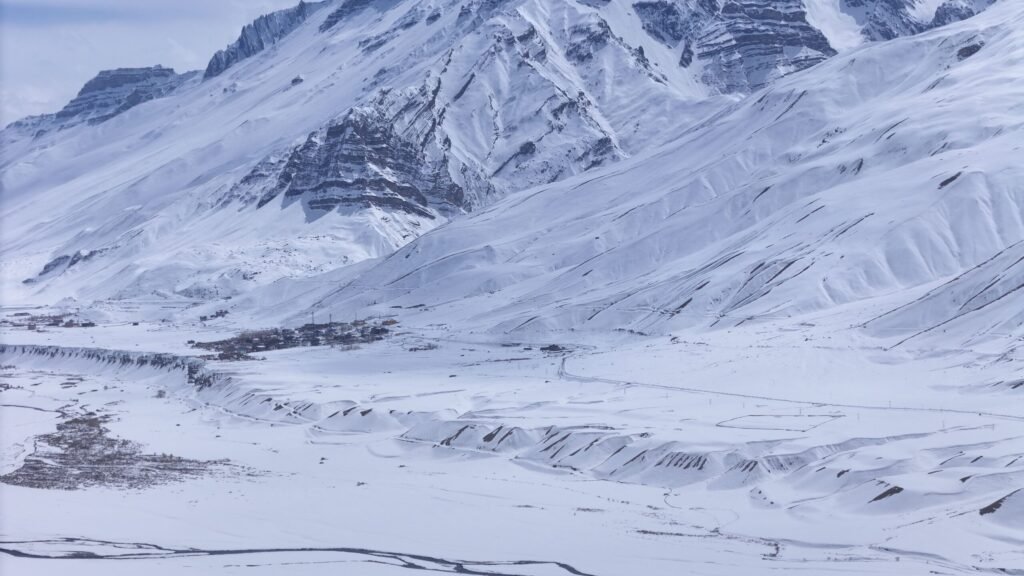
There is something special about seeing Spiti Valley in winter. The familiar mountain villages look completely different under a blanket of snow, rivers turn into frozen stretches of ice, and the wide Himalayan landscape becomes quieter as winter settles in.
For many travellers, visiting Spiti during this season is a dream. But travelling through a remote, high-altitude region in the middle of winter requires careful planning, suitable accommodation and reliable local support.
That’s exactly what the White Spiti – A Grand Winter Road Trip by Altitude Adventure Holidays is designed for.
This 8-day, 7-night journey starts from Chandigarh and takes you through the beautiful Kinnaur region before entering the snow-covered landscapes of Spiti Valley. Along the way, you’ll visit traditional Himalayan villages, ancient Buddhist monasteries and some of the most recognisable viewpoints in the region.
What makes this trip different is the attention given to winter comfort. Every night stay includes heated rooms, breakfast and dinner are provided daily, and an Altitude team manager accompanies the group throughout the journey.
Whether you’re planning your first winter holiday in the Himalayas, travelling with friends or looking for a snow-filled road trip with your partner, White Spiti is a chance to experience the quieter side of the mountains.
In this guide, we’ll cover the best time to visit Spiti in winter, the complete 8-day itinerary, places you’ll explore, package cost, accommodation, packing essentials and important travel tips.
What Is the White Spiti Winter Road Trip?
White Spiti is an 8-day, 7-night guided winter road trip from Chandigarh through Kinnaur to Spiti Valley. The journey is planned for January and February, when the region experiences its characteristic winter conditions and snow-covered landscapes.
Instead of organising a winter road trip independently, travellers join a planned group journey with transportation, heated accommodation, daily breakfast and dinner, and an accompanying Altitude team manager.
The route follows the Kinnaur side to enter Spiti and returns through the same general corridor. This is particularly important during winter, when road conditions and weather can affect travel plans.
The journey reaches a maximum altitude of approximately 4,270 metres (14,009 feet).
White Spiti trip overview
| Trip details | Information |
|---|---|
| Trip name | White Spiti – A Grand Winter Road Trip |
| Duration | 8 Days / 7 Nights |
| Starting point | Chandigarh |
| Ending point | Chandigarh |
| Maximum altitude | 4,270 m / 14,009 ft |
| Best time | January–February |
| Route | Chandigarh–Kinnaur–Spiti–Kinnaur–Chandigarh |
| Accommodation | Heated rooms at every stay |
| Meals | Breakfast and dinner daily |
| Trip support | Altitude team manager throughout |
| Trip type | Guided winter road trip |
| Package price | ₹30,000 + 5% GST |
Why Visit Spiti Valley in Winter?
Spiti is beautiful throughout the year, but winter brings a completely different atmosphere to the valley.
During summer, the region attracts travellers for its open mountain roads, high-altitude villages and road-trip adventures. In winter, many of these places become quieter, with snow-covered houses, frozen streams and white mountain slopes.
The landscape feels almost unreal, especially around the villages of Mudh, Kibber and Komic.
Here are a few reasons why winter is a special time to visit Spiti.
1. See the snow-covered villages of Spiti
Winter gives traditional Spitian villages a completely different appearance. White rooftops, narrow village lanes and frozen surroundings create beautiful settings for photography.
Chitkul, Nako, Mudh and the villages around Kaza each have their own character.
2. Experience frozen rivers and winter landscapes
The cold temperatures transform parts of the valley into a frozen Himalayan landscape. Rivers, streams and water bodies may freeze, depending on the location and weather conditions.
For travellers who have only seen Spiti during summer, this is a very different experience.
3. Visit ancient Buddhist monasteries
Spiti is closely connected with Tibetan Buddhist culture. Monasteries such as Tabo and Key are important parts of the region’s history and everyday life.
Visiting these places during winter gives you an opportunity to see a quieter side of Spiti.
4. Explore remote Himalayan villages
The White Spiti route includes several well-known villages, including Chitkul, Kalpa, Mudh, Kibber, Hikkim, Komic and Langza.
These settlements offer a closer look at life in a high-altitude Himalayan region.
5. Enjoy winter travel with heated accommodation
One of the biggest concerns about visiting Spiti in January or February is the cold.
White Spiti includes heated rooms at every overnight stay, along with breakfast and dinner. An Altitude team manager also accompanies the group throughout the trip.
This makes the journey more organised for travellers who want to experience winter Spiti without rough camping.
Best Time to Visit Spiti Valley in Winter
January and February are the best months for the White Spiti winter road trip.
These months bring the coldest conditions of the season and the possibility of extensive snowfall across the Kinnaur and Spiti regions.
If your dream is to see snow-covered villages, frozen landscapes and the traditional winter atmosphere of Spiti, this is the time to plan your journey.
January: A true Himalayan winter experience
January is one of the coldest months in Spiti.
Many villages experience heavy winter conditions, and temperatures can fall well below freezing, particularly at night.
What you can expect:
- Snow-covered mountain villages.
- Frozen streams and rivers in suitable locations.
- Cold, clear winter mornings.
- Dramatic mountain landscapes.
- A quieter travel experience.
Road conditions can change quickly during this month, so flexibility is important.
February: Snow-covered landscapes and longer days
February continues to bring cold winter conditions, and many parts of Spiti remain covered in snow.
The days gradually become longer, although temperatures remain extremely low.
February is another good month for winter photography and exploring the valley’s traditional villages.
What about December and March?
December marks the beginning of winter conditions in Spiti, while March brings a gradual transition towards spring.
However, the White Spiti package is specifically planned for January and February. Travellers interested in other months should check the available departure schedule.
Important: Snowfall is a natural weather event, not a guaranteed part of any fixed departure. Road closures, changing weather and local safety decisions may also affect the itinerary.
White Spiti Winter Road Trip Route
The White Spiti journey starts from Chandigarh and follows the Kinnaur route into Spiti Valley.
The broad route is:
Chandigarh → Shimla → Sarahan → Chitkul → Kalpa → Nako → Tabo → Mudh → Kaza → Kinnaur → Chandigarh
The journey gradually moves from the lower Himalayan regions into higher-altitude landscapes.
Unlike the summer route that many travellers associate with Spiti, this winter journey follows the Kinnaur side. The route is planned around winter road conditions and available access.
White Spiti 8-Day Itinerary
The following is the day-wise travel plan for the White Spiti winter road trip. Actual driving schedules and sightseeing may change depending on weather, road conditions and local permissions.
Day 1: Chandigarh to Shimla
The journey begins in Chandigarh as the group heads towards Shimla.
Leaving the plains behind, the road gradually climbs into the hills. You’ll start seeing the landscape change as the journey moves towards the Himalayan region.
This first day is planned as an introduction to the mountain journey. It also gives everyone time to settle in and get familiar with the group and travel arrangements.
Route: Chandigarh – Shimla
Highlights:
- Start of the winter road trip.
- Scenic drive through the lower Himalayas.
- Arrival in Shimla.
Day 2: Shimla to Sarahan
After breakfast, continue towards Sarahan through Kufri, Fagu and Narkanda.
The road passes through forested slopes, mountain villages and beautiful viewpoints. As you move further towards Kinnaur, the surroundings gradually become more remote.
Sarahan is a peaceful Himalayan town known for its traditional architecture and mountain scenery.
The Bhimakali Temple is one of its best-known landmarks and an important part of the region’s cultural heritage.
Spend the evening enjoying the mountain surroundings before settling in for the night.
Route: Shimla – Kufri – Fagu – Narkanda – Sarahan
Highlights:
- Drive through Narkanda.
- Mountain views and forest landscapes.
- Explore Sarahan.
- Traditional Himachali surroundings.
Day 3: Sarahan to Chitkul
Today, the journey continues towards Sangla Valley and Chitkul.
Chitkul is one of the most popular villages in Kinnaur and is often described as the last inhabited village near the Indo-Tibet border.
The village is known for its traditional wooden houses, mountain scenery and the Baspa River.
During winter, snow-covered rooftops and the surrounding mountains give Chitkul a completely different appearance.
Take some time to explore the village and enjoy the quiet atmosphere.
Route: Sarahan – Sangla – Chitkul
Highlights:
- Scenic drive through Sangla Valley.
- Visit Chitkul village.
- Views of the Baspa River.
- Traditional wooden houses and winter scenery.
Day 4: Chitkul to Kalpa
After breakfast, leave Chitkul and travel towards Kalpa.
Kalpa is one of the most recognised destinations in Kinnaur, known for its views of the Kinnaur Kailash mountain range.
The village has traditional wooden architecture, apple orchards and a distinctive Himalayan setting.
Kalpa is also associated with local religious traditions and is often described as the winter abode of Lord Shiva.
If the weather is clear, you may get beautiful views of the surrounding snow-covered peaks.
Route: Chitkul – Kalpa
Highlights:
- Mountain drive through Kinnaur.
- Explore Kalpa village.
- Views of the Kinnaur Kailash range.
- Traditional Himalayan architecture.
Day 5: Kalpa to Tabo via Nako
Today, the journey enters the Spiti region.
After leaving Kalpa, travel towards Nako, a high-altitude village known for its beautiful lake and traditional houses.
The route passes through the Khab Bridge and the dramatic confluence of the Sutlej and Spiti rivers.
As you continue towards Tabo, the landscape begins to take on the distinctive character of Spiti, with barren mountain slopes, deep valleys and scattered settlements.
Tabo is home to the famous Tabo Monastery, one of the most important Buddhist monasteries in the region.
Its history and traditional architecture make it an important stop for anyone interested in Spiti’s Buddhist heritage.
Route: Kalpa – Nako – Khab Bridge – Tabo
Highlights:
- Visit Nako village and lake.
- Cross the Khab Bridge.
- See the Sutlej–Spiti river confluence.
- Explore the surroundings of Tabo.
Day 6: Tabo to Mudh
After breakfast, continue deeper into Spiti towards Mudh village.
Mudh is located in the Pin Valley region at approximately 3,810 metres above sea level.
The route takes you through a high-altitude landscape of rugged mountains, wide valleys and remote settlements.
During winter, the surroundings can be covered in snow, creating a striking contrast against the barren mountains.
Mudh is particularly interesting for travellers who want to see the quieter and less urbanised side of Spiti.
Route: Tabo – Mudh
Highlights:
- Explore the Pin Valley region.
- Visit Mudh village.
- High-altitude Himalayan landscapes.
- Snow-covered village surroundings, depending on conditions.
Day 7: Mudh to Kaza
Today, travel from Mudh to Kaza, the main administrative and commercial centre of Spiti Valley.
Kaza is an important base for exploring the surrounding villages and monasteries.
The town has a distinctive high-altitude atmosphere, with mountain views and traditional Spitian architecture.
Depending on local conditions and the available schedule, you can explore the surroundings and enjoy the winter scenery.
Route: Mudh – Kaza
Highlights:
- Drive through the Spiti Valley.
- Arrival at Kaza.
- Explore the main town.
- Experience local Spitian culture.
Day 8: Kaza sightseeing and return journey
The final day is planned for exploring some of Spiti’s most recognised destinations.
The sightseeing circuit includes:
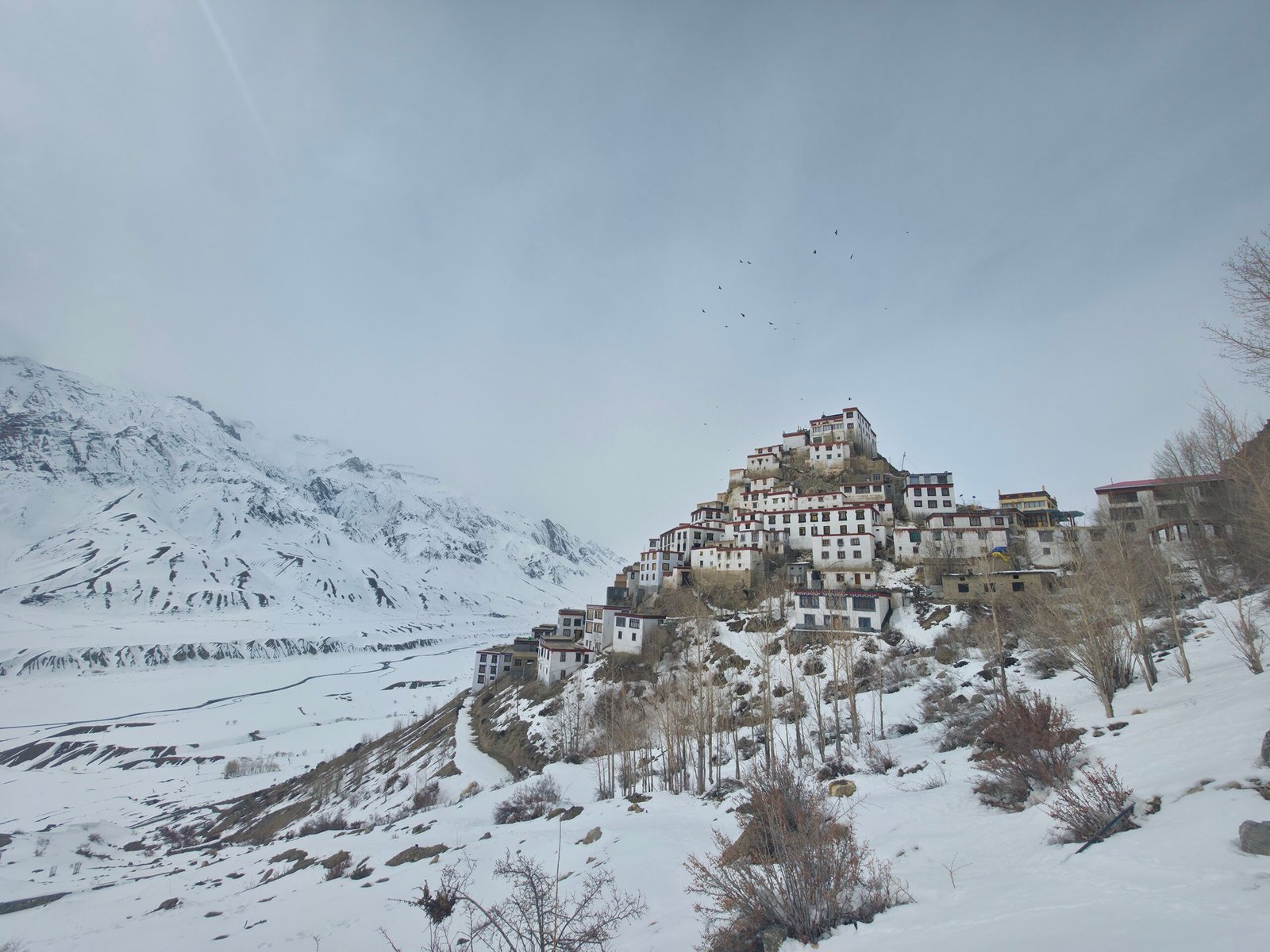
Key Monastery: One of the most famous Buddhist monasteries in Spiti, located on a hill overlooking the valley.
Kibber: A well-known high-altitude village surrounded by rugged mountain scenery.
Hikkim: Famous for its high-altitude post office.
Komic: Known for its remote location and high-altitude village setting.
Langza: Popular for its giant Buddha statue, fossil-rich surroundings and mountain views.
After sightseeing, the group begins the return journey through Kinnaur towards Chandigarh, completing the White Spiti winter road trip.
The final day’s sightseeing and return schedule are subject to confirmation based on the actual departure plan and winter road conditions.
Places to Visit in Spiti Valley During Winter
The White Spiti road trip covers several destinations across Kinnaur and Spiti. Each place has something different to offer.
| Destination | What makes it special |
|---|---|
| Shimla | Mountain town and gateway to the journey |
| Sarahan | Traditional architecture and mountain views |
| Chitkul | Snow-covered village and Baspa River |
| Kalpa | Views of the Kinnaur Kailash range |
| Nako | High-altitude village and lake |
| Tabo | Historic Buddhist monastery |
| Mudh | Remote village in the Pin Valley region |
| Kaza | Main town and base for Spiti exploration |
| Key Monastery | Famous hilltop Buddhist monastery |
| Kibber | High-altitude Himalayan village |
| Hikkim | Famous for its high-altitude post office |
| Komic | Remote high-altitude village |
| Langza | Buddha statue, fossils and mountain views |
What Makes White Spiti Different from Other Winter Trips?
Travelling in Spiti during winter is very different from visiting during summer. The weather is harsher, accommodation options can be limited, and road conditions may change without much notice.
White Spiti has been planned around these winter travel requirements.
Heated rooms at every stay
A warm place to rest matters when outside temperatures drop below freezing.
The package includes heated rooms at every overnight stay, so travellers can relax after a long day on the mountain roads.
Daily breakfast and dinner
The package includes breakfast and dinner every day.
This means you don’t have to arrange these meals independently during the journey.
An Altitude team manager throughout the trip
A dedicated Altitude team manager travels with the group throughout the journey.
The team manager coordinates the trip and provides on-ground assistance as the group moves through Kinnaur and Spiti.
A planned winter route
The journey follows the Kinnaur side into Spiti and returns through the same general route.
Winter travel needs flexibility, and the itinerary may be adjusted depending on snowfall, road accessibility, weather and local permissions.
Is Spiti Valley Safe to Visit in Winter for Beginners?
Yes, fit travellers can visit Spiti in winter with a properly planned road trip, but it is not an easy holiday destination.
Temperatures can drop well below freezing, road conditions can change quickly and the journey reaches high-altitude locations.
White Spiti includes heated accommodation, daily meals, planned transportation and an accompanying team manager. These arrangements make the trip more organised than an independent winter journey.
However, travellers should be comfortable with long road journeys and cold weather.
A few precautions are particularly important:
- Follow the team’s instructions throughout the trip.
- Drink enough water and avoid dehydration.
- Avoid alcohol during the high-altitude journey.
- Get adequate rest.
- Avoid rushing physical activities.
- Inform the team immediately if you experience a severe headache, vomiting, breathlessness or unusual fatigue.
Travellers with existing medical conditions should consult a doctor before planning a winter trip to high-altitude Spiti.
What to Pack for a Spiti Winter Road Trip
Packing for Spiti in January or February requires more attention than packing for an ordinary hill station holiday.
The temperature can be extremely low, particularly during the night and early morning. Even on sunny days, the mountain air can feel very cold.
Here’s what you should carry.
Winter clothing
- Thermal innerwear.
- Heavy padded or down jacket.
- Fleece jacket or warm sweaters.
- Waterproof and windproof outer jacket.
- Woollen socks.
- Warm gloves.
- Woollen cap and muffler.
Footwear
- Waterproof winter shoes with good grip.
- Comfortable walking shoes.
- Extra pairs of warm socks.
Personal essentials
- UV-protection sunglasses.
- Sunscreen.
- Moisturiser.
- Lip balm.
- Personal medicines.
- Basic first-aid supplies.
- Reusable water bottle.
Electronics and photography
- Camera or smartphone.
- Power bank.
- Torch.
- Spare batteries.
- Extra memory cards.
- Charging cables.
One useful tip: keep your phone and camera batteries warm whenever possible. Cold temperatures can reduce battery performance, particularly when you’re outdoors for extended periods.
White Spiti Winter Road Trip Cost
The listed package price for White Spiti – A Grand Winter Road Trip is:
| Package details | Amount |
|---|---|
| Package price per person | ₹30,000 |
| GST (5%) | ₹1,500 |
| Total including GST | ₹31,500 |
| Duration | 8 Days / 7 Nights |
The package is designed to include heated accommodation, daily breakfast and dinner, planned road transportation and an Altitude team manager throughout the journey.
For the exact departure dates, vehicle arrangements, detailed inclusions and availability, please contact Altitude Adventure Holidays.
Group bookings and customised arrangements can also be discussed with the team.
Why Book Your White Spiti Trip with Altitude Adventure Holidays?
A winter journey through Kinnaur and Spiti needs more preparation than an ordinary road trip. Accommodation, transportation, meal arrangements and daily travel coordination all matter when you’re travelling through remote Himalayan locations.
At Altitude Adventure Holidays, we plan the White Spiti journey around these requirements.
The package includes heated rooms at every stay, daily breakfast and dinner, and a dedicated team manager travelling with the group.
Our aim is to make the journey organised and comfortable while allowing travellers to experience the real winter atmosphere of the Himalayas.
Whether you’re planning a winter holiday with friends, a couple’s getaway or a group adventure, White Spiti is an opportunity to explore one of Himachal Pradesh’s most distinctive mountain regions.
Frequently Asked Questions About the White Spiti Winter Road Trip
1. What is White Spiti?
White Spiti is an 8-day, 7-night guided winter road trip from Chandigarh through Kinnaur into Spiti Valley. The package includes heated accommodation, breakfast and dinner every day, and an Altitude team manager throughout the journey.
2. Is Spiti Valley open in winter?
Yes, Spiti Valley can be visited in winter through the Kinnaur route. However, snowfall, road conditions and weather can affect accessibility. Travellers should check local road conditions and follow the operator’s travel advice.
3. Which is the best month to visit Spiti Valley in winter?
January and February are the best months for the White Spiti winter experience. These months are particularly suitable for travellers looking for snow-covered villages and a traditional Himalayan winter atmosphere.
4. How cold is Spiti Valley in January and February?
Spiti experiences extremely cold winter conditions. Night-time temperatures can fall well below freezing, especially in higher-altitude villages. Proper winter clothing and heated accommodation are essential.
5. How many days are required for a Spiti winter road trip?
The White Spiti itinerary takes 8 days and 7 nights, starting and ending in Chandigarh. It covers destinations across Shimla, Kinnaur and Spiti Valley.
6. What is the maximum altitude of the White Spiti trip?
The maximum altitude listed for the White Spiti journey is approximately 4,270 metres or 14,009 feet above sea level.
7. Is White Spiti suitable for beginners?
Yes, fit travellers who are comfortable with long road journeys and high-altitude conditions can consider this trip. However, winter Spiti is a demanding destination, and travellers should be prepared for extreme cold and changing road conditions.
8. Does the White Spiti package include heated accommodation?
Yes. Heated rooms are included at every overnight stay during the 8-day journey.
9. Are meals included in the White Spiti package?
Yes. Daily breakfast and dinner are included in the package.
10. Is a team manager available throughout the journey?
Yes. A dedicated Altitude team manager accompanies the group throughout the White Spiti road trip.
11. Is White Spiti suitable for couples?
Yes. Couples looking for a winter Himalayan road trip can consider White Spiti. The journey includes heated rooms, planned transportation and daily meals.
12. What is the cost of the White Spiti winter tour?
The listed package price is ₹30,000 per person plus 5% GST. The total comes to ₹31,500 per person, including GST.
13. Which places are covered in the White Spiti itinerary?
The broader itinerary covers Shimla, Sarahan, Chitkul, Kalpa, Nako, Tabo, Mudh, Kaza, Key Monastery, Kibber, Hikkim, Komic and Langza.
14. Is snowfall guaranteed during the White Spiti trip?
No. Although January and February are winter months with the possibility of snowfall, actual weather conditions cannot be guaranteed. The experience depends on local weather and seasonal conditions.
15. Does the White Spiti trip start from Chandigarh?
Yes. Chandigarh is the starting and ending point of the 8-day White Spiti road trip.
Experience Winter in the Himalayas with White Spiti
Some places are worth seeing in every season, but Spiti in winter has a character of its own.
From the traditional houses of Chitkul and the mountain views of Kalpa to the ancient monasteries of Tabo and the remote villages around Kaza, this journey takes you through a very different side of Himachal Pradesh.
The cold is real, the roads can be challenging and plans sometimes need to change with the weather. But with heated stays, planned meals and an accompanying team manager, you can experience winter Spiti with better travel arrangements.
If a snow-covered Himalayan road trip has been on your travel list, this could be the right time to plan it.
Ready to experience White Spiti?
Join Altitude Adventure Holidays for an 8-day winter road trip through Kinnaur and Spiti Valley.
- Duration: 8 Days / 7 Nights
- Starting point: Chandigarh
- Travel season: January–February
- Package price: ₹30,000 + 5% GST
Book your White Spiti – A Grand Winter Road Trip
Contact Altitude Adventure Holidays for available departures, detailed package information and group bookings.
- Phone/WhatsApp:+91 6291 696669
- Email:hello@visitaltitude.in
Altitude Adventure Holidays – Hello Travellers!